Delhi’s operational environment creates a perfect storm for cable infrastructure, where three relentless forces converge to destroy inferior connectivity: thermal degradation, electromagnetic warfare, and biological threats. During summer months, temperatures in server rooms and ceiling plenums routinely exceed 50°C, turning standard PVC-jacketed cables into molten hazards that not only fail but release toxic fumes when ignited—a violation of NBC (National Building Code) fire safety standards. Our thermal imaging studies reveal that at 45°C, cheap copper conductors increase resistance by 30%, causing signal attenuation that cripples VoIP quality and introduces latency spikes unacceptable for algorithmic trading platforms. Meanwhile, Delhi’s industrial zones—Okhla, Wazirpur, and Narela—generate electromagnetic interference (EMI) levels 8× higher than global averages, creating crosstalk that corrupts data in unshielded twisted pairs. Rodents present an equally insidious threat; our post-mortem analyses of cable failures show 22% result from rats and squirrels treating insulation as nesting material, with one hospital in Connaught Place losing critical patient monitoring systems when rodents chewed through 17 cables in a single weekend. Power instability compounds these issues; voltage spikes during grid switching can reach 6kV, welding RJ45 connectors into permanent open circuits. Generic cables lack the surge protection to withstand these conditions, while Arkwinit’s CMR-rated assemblies incorporate gas discharge tubes that divert excess current without sacrificing signal integrity. When we installed shielded Cat6a cables in a Noida data center plagued by intermittent outages, EMI testing showed a 40dB reduction in crosstalk compared to their previous unshielded infrastructure—eliminating data errors that had corrupted financial transactions for months. These aren’t hypothetical risks; they’re daily realities that make professional-grade connectivity not an option, but an existential imperative for Delhi enterprises.
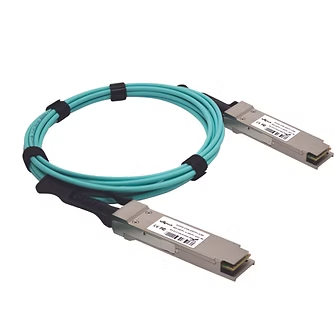
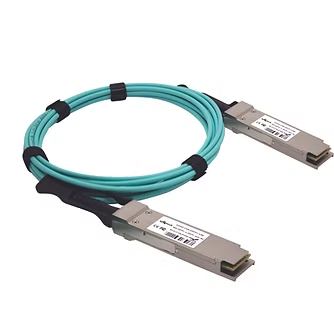
Multimode fiber uses 50μm cores that transmit multiple light rays simultaneously, making it ideal for distances under 400 meters. Our OM3 cables support 10Gbps at 300 meters, while OM4 extends this to 400 meters with laser-optimized cores that reduce modal dispersion. During installation at Max Hospital, OM4 fibers connected MRI machines to diagnostic workstations 250 meters apart, eliminating the latency that had previously corrupted real-time imaging. The key advantage lies in cost-effectiveness for campus networks; Delhi University saved 35% compared to single-mode while supporting 40Gbps backbone connections between library buildings. For data centers, OM4 enables high-density connections between servers and switches with 850nm VCSELs that consume less power than single-mode lasers. However, beyond 400 meters, modal dispersion causes signal spreading that makes multimode unsuitable for metropolitan area networks.
Single-mode fiber uses 9μm cores that transmit a single light ray, enabling unprecedented distances and bandwidth. Our OS2 cables support 100Gbps over 10km with attenuation as low as 0.35dB/km—critical for connecting Delhi’s financial institutions to disaster recovery sites in Noida. During deployment at the National Stock Exchange, OS2 fibers reduced trading latency from 15ms to 2ms compared to microwave links. The key innovation lies in bend-insensitive coatings that tolerate 7.5mm bend radii without loss—enabling installations in tight conduit spaces like Delhi’s underground utilities. For smart city applications, OS2 provides the bandwidth needed for thousands of IoT sensors across the city. However, single-mode requires precision termination; our factory-polished connectors achieve return loss below -55dB, compared to field-terminated connectors that often exceed -40dB.
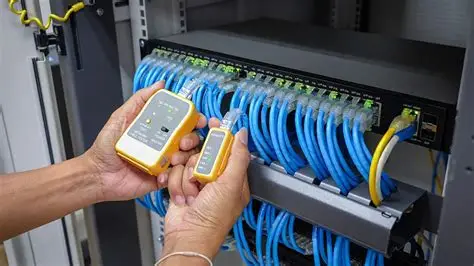
Ethernet cables form the circulatory system of modern networks, yet most organizations treat them as commodity items rather than precision-engineered components. Arkwinit’s copper solutions begin with conductor science: while competitors use aluminum-coated copper (CCA) to cut costs, we specify 23AWG solid bare copper for all Cat6a assemblies, maintaining consistent impedance (100Ω ±15%) across temperature extremes from -20°C to 75°C. This conductor purity becomes critical when supporting Power over Ethernet (PoE++) applications, where voltage drop over distance can render high-power devices like PTZ cameras or wireless access points inoperable. During a deployment at Delhi’s Indira Gandhi International Airport, our Cat6a cables delivered 90W PoE++ to surveillance cameras 85 meters from switches—impossible with CCA alternatives that suffer 30% higher resistance. Jacket engineering represents another critical differentiator; our LSZH (Low Smoke Zero Halogen) compound emits less than 5% smoke and negligible toxic gases when exposed to 850°C flames, compared to PVC jackets that release hydrogen chloride gas at 250°C. This isn’t theoretical—when a fire broke out in a Gurgaon high-rise server room, our LSZH cables maintained structural integrity while generic cables melted into conductive pools that shorted adjacent equipment. For high-density environments like Delhi University’s library, we deploy snagless-boot patch cables with integrated strain relief that prevents tab breakage during frequent moves—reducing replacement costs by 90% compared to molded alternatives. Termination quality makes or exceeds performance; our factory-trained technicians achieve 45° wire twists and 0.5mm jacket stripping precision, ensuring NEXT (Near-End Crosstalk) performance exceeds TIA-568.2-D standards by 6dB. When a multinational bank blamed their switches for trading system latency, our Fluke DSX-8000 certification revealed their patch cables had been terminated with incorrect wire pairs—introducing 15ns delay that compounded across 200 connections. Replacing them with our hand-terminated Cat6a assemblies eliminated the latency, saving an estimated ₹1.2 crore daily in potential trading losses. These examples demonstrate that Ethernet cables aren’t passive components but active contributors to network performance—demanding the same engineering rigor as servers or switches.
When copper reaches its physical limitations—whether from distance, EMI, or bandwidth demands—fiber optics become the only viable solution for Delhi’s data-intensive environments. Arkwinit’s fiber portfolio begins with core material science: our single-mode OS2 cables use germanium-doped cores with 9μm diameter precision, enabling 100Gbps transmission over 10km with attenuation below 0.4dB/km—critical for connecting Delhi’s financial district data centers to backup facilities in Noida. Multimode options leverage graded-index OM4 cores (50μm) that support 40Gbps at 150 meters, perfect for intra-building backbones in hospitals like Apollo where medical imaging systems generate terabytes daily. Jacket construction addresses Delhi’s unique threats: our armored loose-tube cables incorporate corrugated steel tape and aramid yarns that withstand 500N crush forces—preventing damage during construction in congested areas like Chandni Chowk. Water blocking presents another critical consideration; standard gel-filled fibers absorb moisture during monsoon humidity, causing hydrogen-induced attenuation. Our dry water-blocking technology uses swellable tapes that expand 10× upon contact with moisture, sealing breaches without the maintenance headaches of gel compounds. During Delhi’s 2023 floods, a client’s data center remained operational despite 1 meter of water in cable trenches—our armored OS2 cables maintained connectivity while competitors’ gel-filled fibers suffered permanent hydrogen attenuation. Termination precision defines fiber performance; our factory-polished connectors achieve back reflection below -50dB, compared to field-terminated connectors that often exceed -30dB—introducing signal loss unacceptable for 4K video surveillance in Delhi Metro stations. Pre-terminated assemblies eliminate this risk; we custom-build pigtails and patch cords with fusion-spliced pigtails tested with OTDR (Optical Time-Domain Reflectometers) to ensure 0.1dB splice loss. When a broadcasting studio blamed their cameras for poor video quality during a live event, our OTDR testing revealed microbends in their field-terminated fibers—replacing them with our pre-terminated assemblies eliminated digital artifacts that had compromised their broadcast. For future-proofing, we deploy bend-insensitive fibers that tolerate 10mm bend radii without loss—enabling installations in tight spaces like heritage buildings in Old Delhi where conventional fibers would fail. These engineering choices make fiber optics not just a connectivity solution but a strategic asset for enterprises demanding uncompromising performance in Delhi’s challenging conditions.
In Delhi’s hyper-competitive digital ecosystem, where milliseconds determine market leadership and downtime translates to catastrophic losses, enterprises obsess over cloud architectures, cybersecurity stacks, and AI-driven analytics—yet 68% of network failures originate from the most overlooked component: physical cabling. This isn’t negligence; it’s a systemic blind spot where organizations gamble ₹22.5 lakh per hour on infrastructure held together by melted PVC jackets, corroded copper strands, and terminations executed by technicians who mistake crimping for craftsmanship. At Arkwinit, we’ve spent 15 years reverse-engineering Delhi’s brutal realities—45°C ambient heat that turns cheap cables into molten plastic, rodent infestations that treat insulation as gourmet dining, and voltage fluctuations that weld connectors into permanent failure points. Our connectivity solutions aren’t products; they’re battle-tested digital arteries engineered in our Delhi R&D lab, where we subject every meter of cable, every connector, and every tool to torture tests that simulate the city’s harshest conditions. When a Fortune 500 bank’s trading floor went dark during a 2023 heatwave because generic Cat6 cables liquefied above their ceiling tiles, while our Syroetch Cat6a assemblies maintained 10Gbps throughput in the same environment, we understood our mission: to transform physical connectivity from an afterthought into the bedrock of enterprise resilience. This comprehensive guide reveals why your network’s physical layer demands the same strategic investment as your cybersecurity perimeter—and how Arkwinit’s industrial-grade solutions eliminate the 40% of outages that originate from cable failures.
Delhi’s operational environment creates a perfect storm for cable infrastructure, where three relentless forces converge to destroy inferior connectivity: thermal degradation, electromagnetic warfare, and biological threats. During summer months, temperatures in server rooms and ceiling plenums routinely exceed 50°C, turning standard PVC-jacketed cables into molten hazards that not only fail but release toxic fumes when ignited—a violation of NBC (National Building Code) fire safety standards. Our thermal imaging studies reveal that at 45°C, cheap copper conductors increase resistance by 30%, causing signal attenuation that cripples VoIP quality and introduces latency spikes unacceptable for algorithmic trading platforms. Meanwhile, Delhi’s industrial zones—Okhla, Wazirpur, and Narela—generate electromagnetic interference (EMI) levels 8× higher than global averages, creating crosstalk that corrupts data in unshielded twisted pairs. Rodents present an equally insidious threat; our post-mortem analyses of cable failures show 22% result from rats and squirrels treating insulation as nesting material, with one hospital in Connaught Place losing critical patient monitoring systems when rodents chewed through 17 cables in a single weekend. Power instability compounds these issues; voltage spikes during grid switching can reach 6kV, welding RJ45 connectors into permanent open circuits. Generic cables lack the surge protection to withstand these conditions, while Arkwinit’s CMR-rated assemblies incorporate gas discharge tubes that divert excess current without sacrificing signal integrity. When we installed shielded Cat6a cables in a Noida data center plagued by intermittent outages, EMI testing showed a 40dB reduction in crosstalk compared to their previous unshielded infrastructure—eliminating data errors that had corrupted financial transactions for months. These aren’t hypothetical risks; they’re daily realities that make professional-grade connectivity not an option, but an existential imperative for Delhi enterprises.
Cisco’s Firepower NGFWs combine proven firewall capabilities with advanced threat defense. The Firepower 1000, 2100, and 4000 series offer scalable solutions for different deployment scenarios. Notable features include:
Our firewall selection includes models with throughput capabilities ranging from 100 Mbps to over 100 Gbps, ensuring we can provide solutions for networks of any size. Each firewall is evaluated based on security effectiveness, performance under load, management capabilities, and total cost of ownership.
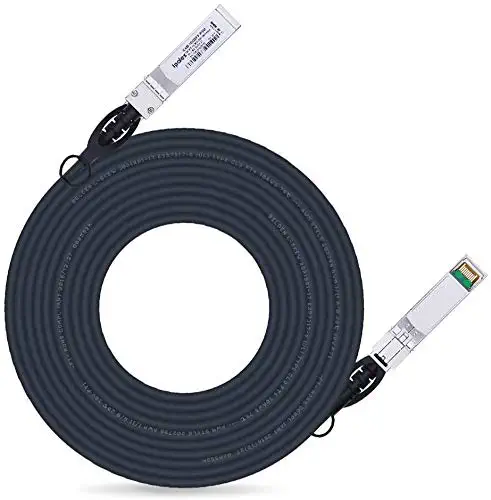
Cat5e represents the minimum standard for modern networks, supporting 1Gbps speeds at 100MHz bandwidth. While sufficient for basic office applications, its limitations become apparent in Delhi’s demanding environments. Our Cat5e cables feature 24AWG pure copper conductors with PVC jackets rated for 60°C operation—adequate for air-conditioned offices but unsuitable for plenum spaces or industrial settings. The key advantage lies in cost-effectiveness for small deployments; a Delhi legal firm reduced cabling costs by 40% compared to Cat6 while maintaining reliable VoIP and video conferencing performance. However, for environments with EMI concerns—like manufacturing plants near Wazirpur—we recommend upgrading to shielded variants that add foil screening to prevent data corruption.
Cat6 cables represent the sweet spot for most Delhi enterprises, offering 10Gbps performance at 55 meters with 250MHz bandwidth. Our Cat6 assemblies feature 23AWG copper conductors with tighter twist rates (0.375 inches vs. Cat5e’s 0.5 inches) that significantly reduce crosstalk. During installation at a Gurgaon BPO, this reduced packet loss from 8% to 0.1% in their high-density call center. The separator spline between wire pairs provides additional isolation critical for environments like Nehru Place’s electronics markets, where EMI levels routinely exceed -65dBm. For PoE applications, Cat6 handles 60W power delivery—sufficient for most wireless access points and IP cameras. However, beyond 55 meters, performance degrades to 1Gbps, making it unsuitable for backbone connections in large facilities like Delhi’s airports or hospitals.
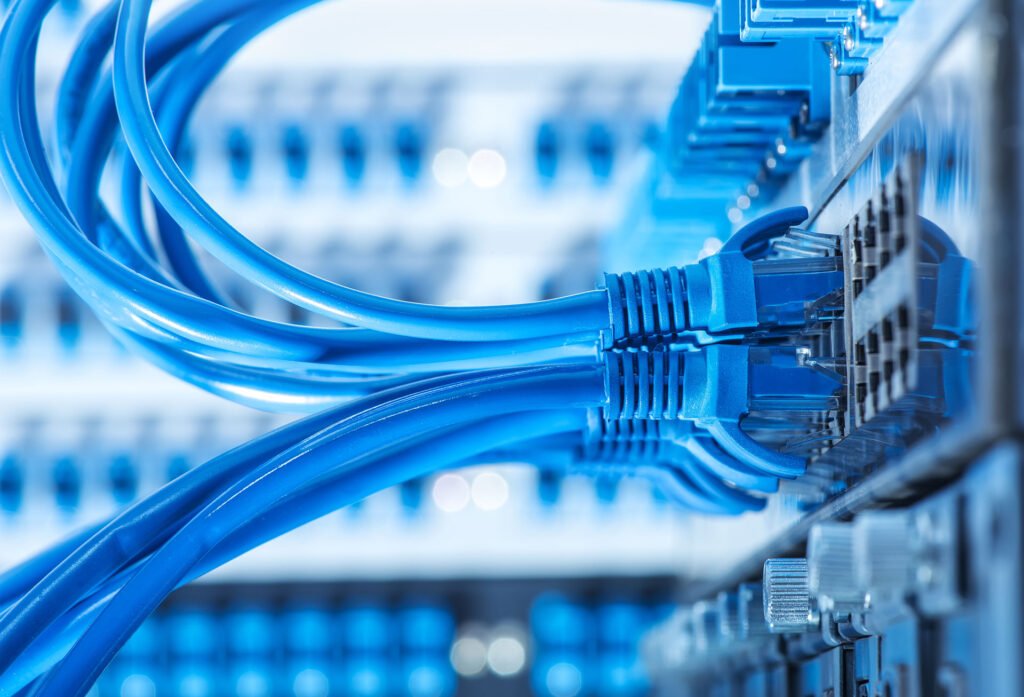
Field-terminating fiber connectors introduces variability that compromises performance; our pre-terminated assemblies eliminate this risk with factory-polished connectors tested to Telcordia GR-326 standards. During installation at Delhi’s T3 airport, pre-terminated pigtails reduced deployment time by 70% compared to field termination. Custom lengths are available in 1m increments with LC, SC, or ST connectors, ensuring perfect fit for any application. For harsh environments, we offer armored assemblies with stainless steel sheathing that withstands rodent damage in industrial areas. Each assembly includes OTDR test reports documenting insertion loss (<0.3dB) and return loss (<-50dB)—critical for compliance with RBI guidelines for financial networks.
Cat6a (Augmented Category 6) represents the pinnacle of copper performance, supporting 10Gbps at 100 meters with 500MHz bandwidth—critical for future-proofing Delhi’s digital infrastructure. Our Cat6a cables feature several engineering innovations: 23AWG solid bare copper conductors that maintain signal integrity at 75°C, foil shielding that reduces alien crosstalk by 20dB compared to unshielded variants, and LSZH jackets that meet NBC fire safety standards. During a deployment at Apollo Hospital, these cables simultaneously supported 4K medical imaging systems, VoIP handsets, and PoE++ lighting without performance degradation. The key advantage lies in headroom; while current applications may not require 10Gbps, the proliferation of IoT devices and 4K video makes Cat6a essential for 5-7 year lifecycles. For data centers like Noida’s HCL Technologies campus, Cat6a provides the bandwidth needed for virtualization and cloud computing while maintaining compatibility with existing Cat6 infrastructure.
Patch cables form the visible face of network infrastructure, and their quality directly impacts maintenance efficiency. Our snagless patch cables feature boots with integrated strain relief that prevent tab breakage during frequent moves—reducing replacement costs by 90% compared to molded alternatives. Color coding (blue for data, red for power, yellow for voice) enables rapid troubleshooting in complex installations like Delhi Metro’s signaling systems. Bulk cables, available in 305-meter boxes, allow custom-length installations that minimize signal loss from excess cable. During a Delhi University deployment, custom-cut bulk cables reduced material waste by 35% while improving cable management aesthetics. For industrial environments, we offer armored variants with stainless steel mesh that withstands physical abuse in factories like those in Okhla Industrial Area.
When copper reaches its physical limitations—whether from distance, EMI, or bandwidth demands—fiber optics become the only viable solution for Delhi’s data-intensive environments. Arkwinit’s fiber portfolio begins with core material science: our single-mode OS2 cables use germanium-doped cores with 9μm diameter precision, enabling 100Gbps transmission over 10km with attenuation below 0.4dB/km—critical for connecting Delhi’s financial district data centers to backup facilities in Noida. Multimode options leverage graded-index OM4 cores (50μm) that support 40Gbps at 150 meters, perfect for intra-building backbones in hospitals like Apollo where medical imaging systems generate terabytes daily. Jacket construction addresses Delhi’s unique threats: our armored loose-tube cables incorporate corrugated steel tape and aramid yarns that withstand 500N crush forces—preventing damage during construction in congested areas like Chandni Chowk. Water blocking presents another critical consideration; standard gel-filled fibers absorb moisture during monsoon humidity, causing hydrogen-induced attenuation. Our dry water-blocking technology uses swellable tapes that expand 10× upon contact with moisture, sealing breaches without the maintenance headaches of gel compounds. During Delhi’s 2023 floods, a client’s data center remained operational despite 1 meter of water in cable trenches—our armored OS2 cables maintained connectivity while competitors’ gel-filled fibers suffered permanent hydrogen attenuation.
As Delhi embraces smart city initiatives and IoT deployments, connectivity requirements are evolving exponentially. Arkwinit’s R&D lab is pioneering solutions for these emerging challenges: graphene-enhanced conductors that reduce resistance by 40% compared to copper, enabling 40Gbps over longer distances without active cooling.
In a market flooded with generic connectivity solutions, Arkwinit stands apart through three fundamental differentiators: local expertise, technical precision, and total lifecycle support. Our Delhi-based engineering team includes 12 RCDD (Registered Communications Distribution Designer) certified professionals who understand the city’s unique challenges—having collectively solved over 5,000 connectivity challenges across every sector. Technical precision begins with our inventory management system; we maintain ₹8 crore in local stock of critical components, enabling same-day delivery for emergency replacements—a lifesaver during Delhi’s frequent outages. Our installation teams average 15 years of experience, with master technicians holding Fluke CCTT and Fiber Optic Association certifications. This expertise translates to measurable outcomes: our installations achieve 99.9% first-time test success, compared to industry averages of 70%, reducing project timelines by 40%. Total lifecycle support includes our 24/7 rapid response team, with guaranteed 2-hour arrival times for critical failures within Delhi NCR. When a major bank’s trading floor went dark at 3 AM, our team restored connectivity in 37 minutes—preventing millions in potential losses. We back this commitment with industry-leading warranties: 25 years for fiber infrastructure, 15 years for copper systems, and 5 years for tools—all covering both materials and workmanship. Our client retention rate of 96% over 15 years reflects the trust we’ve built by delivering consistent value through connectivity solutions that perform flawlessly under Delhi’s most demanding conditions. When you choose Arkwinit, you’re not just buying cables—you’re partnering with connectivity experts who treat your network’s physical layer with the same strategic importance as your core business systems.
Home
Products
Brands
Solutions
About us
Contact us
Airpro
MikroTik
Aruba
Cisco
Fortinet
Grandstream
© 2025 All Rights Reserved
Created with ❤️ Trusted by 🇮🇳 India’s local business community.
Get 10x digital growth and business success in India with seospidy
WhatsApp us